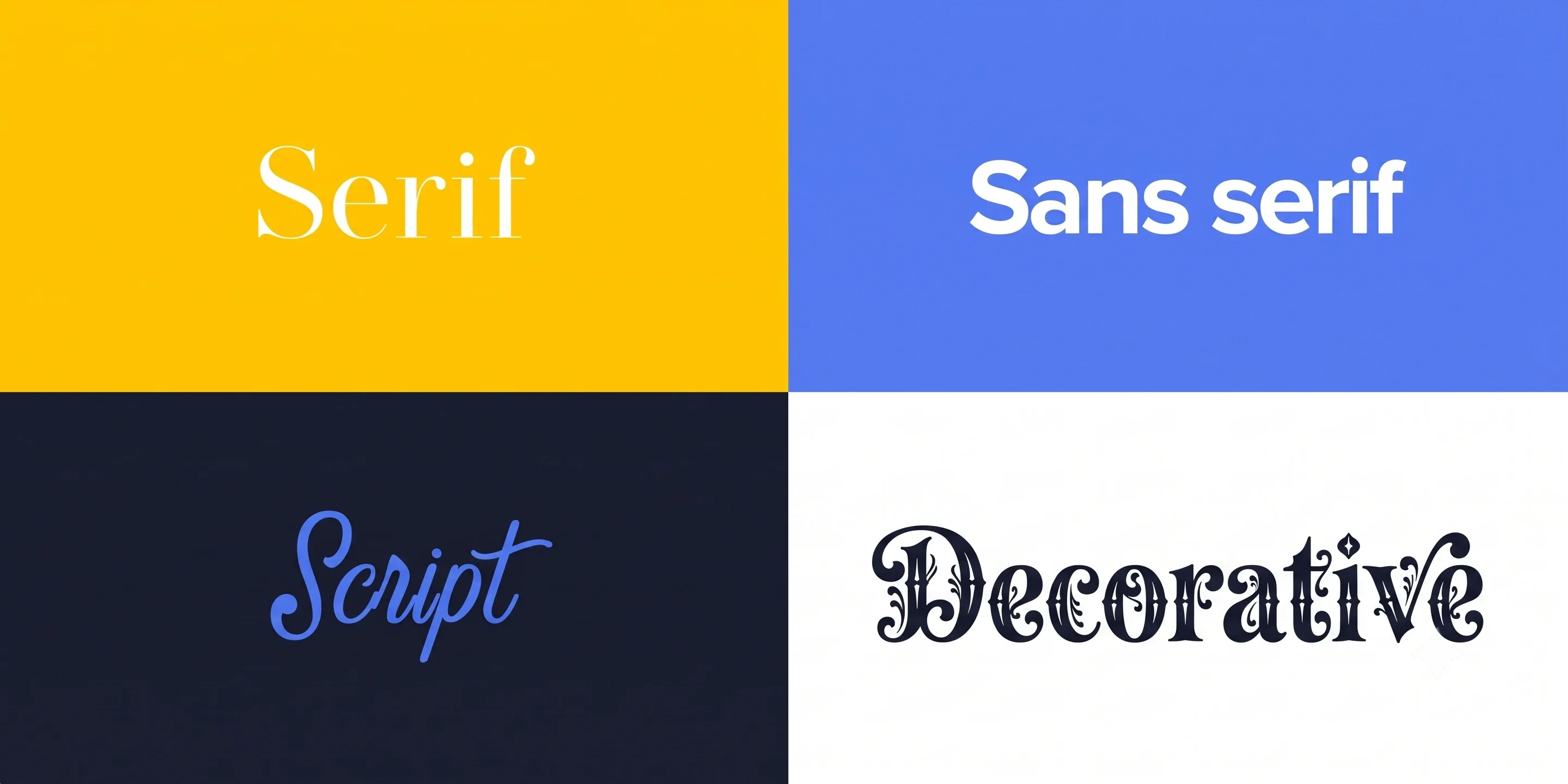
Understanding the core differences between font types is essential for any brand aiming to build a recognisable identity and establish a strong, integrated digital presence. Furthermore, as fonts are a pivotal functional component of a brand’s visual identity, and have the power to evoke emotions and communicate values, their selection becomes a crucial aspect of brand strategy.
Fortunately, it’s not necessary to understand the individual differences between the thousands of fonts in existence. Rather, a general understanding of the most popular font types (from which most fonts are developed and designed) will be sufficient to guide your selection of appropriate fonts for your brand.
The literature and modern discourse reference several different font types, with differences on which are the most widely used. However, the following 4 font types have been identified as the most relevant overarching font categories: Serif, Sans-serif, Script, and Display. This article will delve into each font, exploring its unique characteristics, psychological associations, and popular industries of application.
4 Different Types of Fonts
Let’s see how it all works:
1. Serif fonts
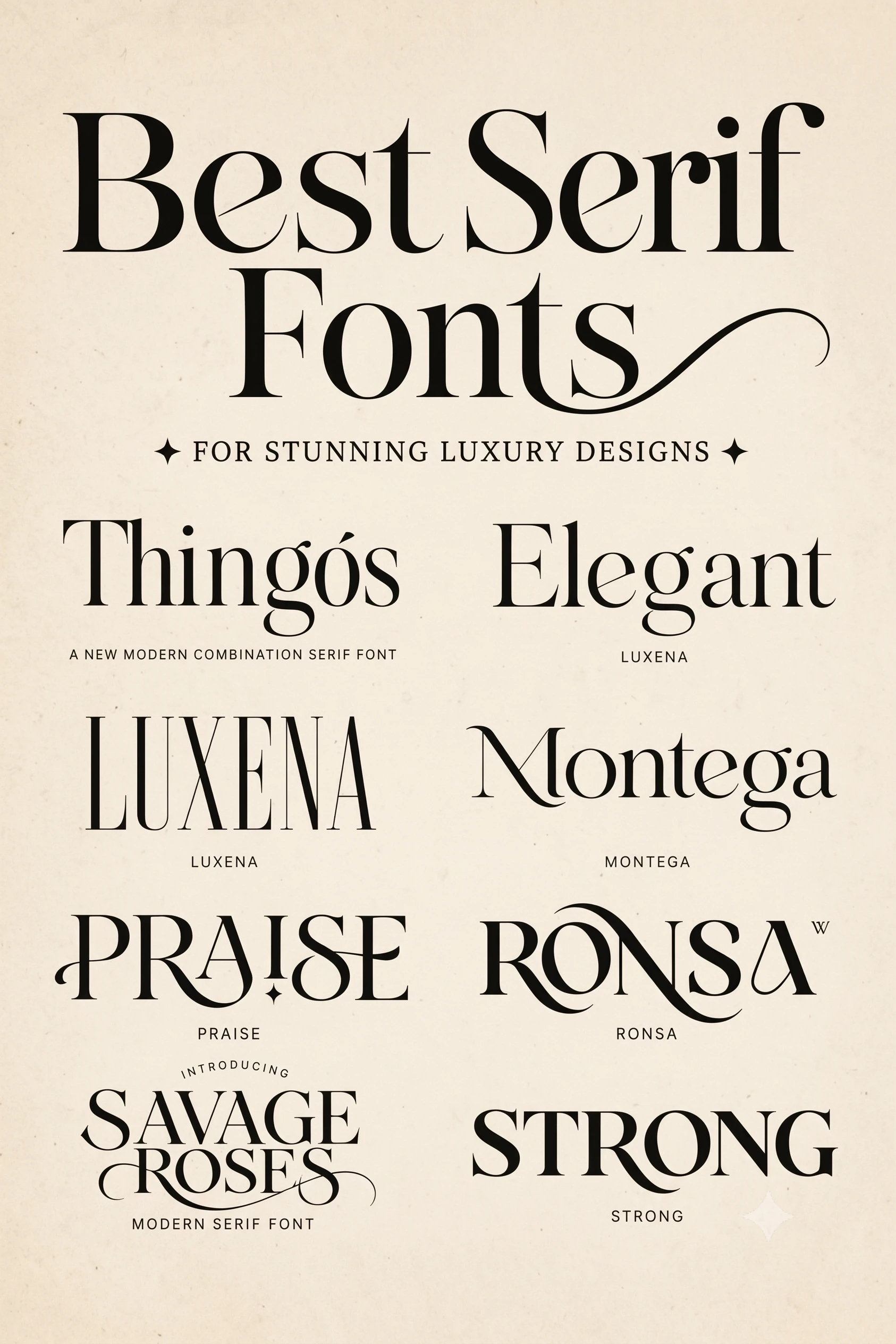
Serif fonts have small decorative lines (called serifs) at the ends of the letters. These fonts have deep historical origins dating back to ancient Roman inscriptions continuing through to their predominant use in the early days of printing. This longstanding history, coupled with Serif fonts’ consistent use in formal and scholarly documents, has cemented their status as symbols of authority, credibility, and knowledge.
The decorative nature of the serifs, in contrast to the minimalist nature of Sans-serif fonts, further reinforces its connection to craftsmanship and authenticity. Additionally, Serif fonts project an aura of expertise, professionalism, and trust.
Consequently, Serif fonts have proven to be popular among brands in the law, finance, publishing, and luxury fashion industries. Thus, brands that want to convey a traditional, classic, and sophisticated identity should consider using Serif fonts in their typography.
2. Sans-serif fonts
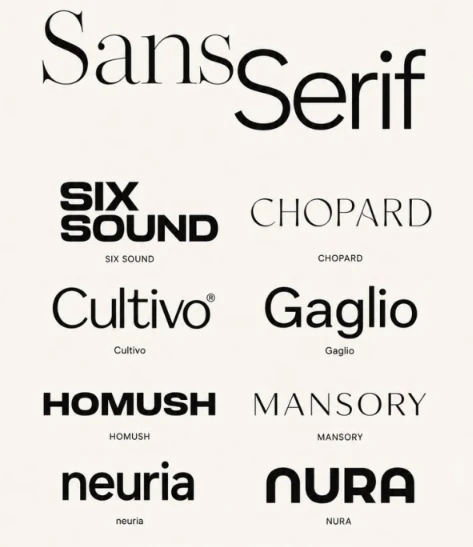
In contrast to Serif fonts, Sans-serif fonts are characterised by their lack of decorative lines at the ends of letters. These fonts emerged as a response to the complexities of Serif fonts, gaining prominence in the 19th and 20th centuries with the rise of modernist design movements. Their streamlined simplicity aligns with the principles of clarity and functionality, making them a symbol of modernity and progress.
Sans-serif fonts have become a cornerstone of modern typography, especially in the world of digital branding. Their minimalist, clean, and contemporary appearance means that these font types are highly versatile and effective in a wide range of channels, ranging from corporate branding to user interface design. Sans-serif fonts are therefore associated with efficiency, clarity, and innovation.
Sans-serif fonts have proven to be a popular choice among technology, lifestyle, creative, and future-focused brands. This popularity highlights the shift towards simplicity and clarity in modern-day digital design. Thus, brands aiming to project a modern, approachable, and innovative image should consider using Sans-serif fonts in their typography.
3. Script fonts
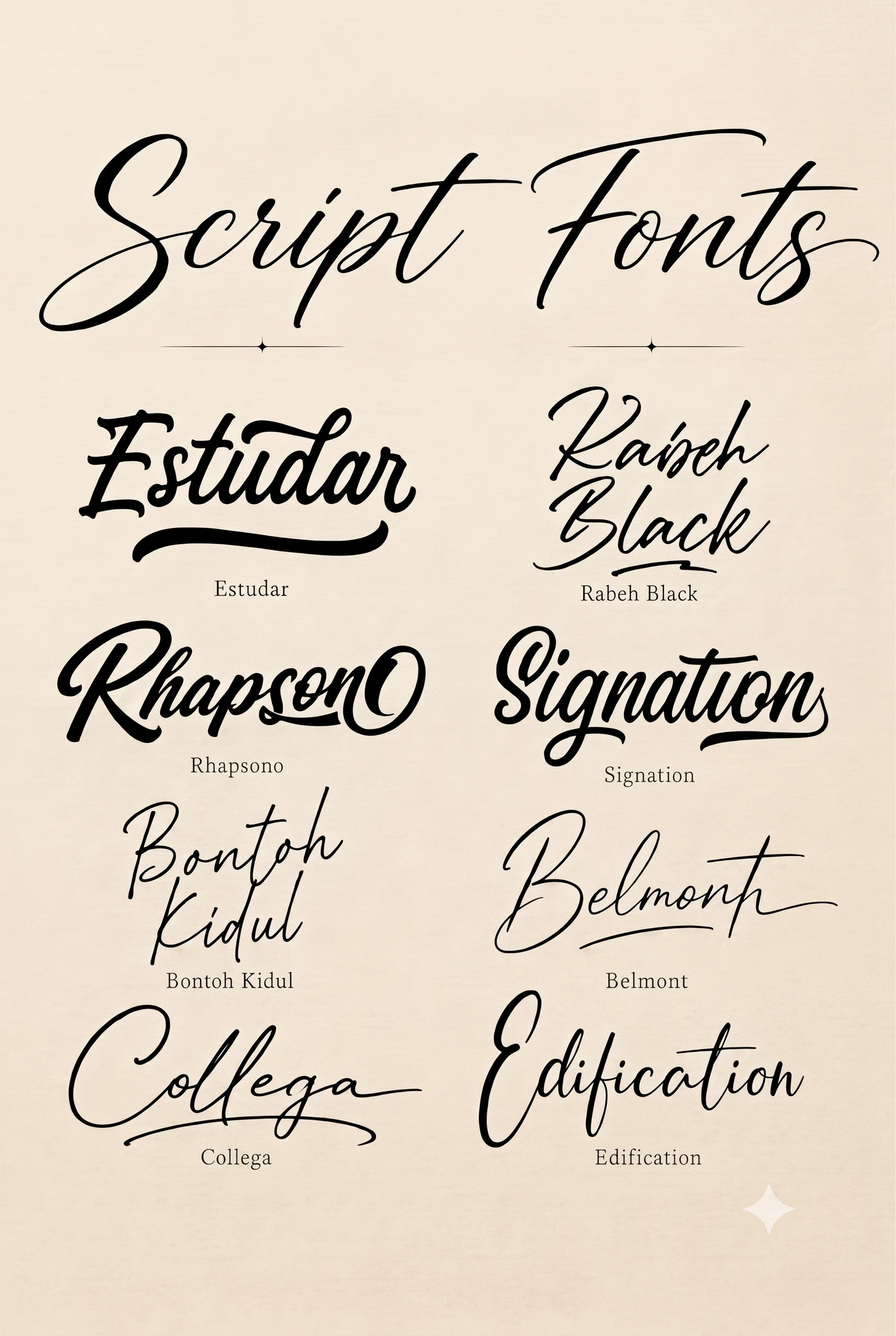
Script fonts mimic the fluidity and variability of handwriting by often featuring varied stroke weights and flowing lines. The origins of these fonts are linked to calligraphy and cursive writing styles that have been part of written human communication for centuries. Thus, the personal and artistic nature of script fonts conveys a sense of individuality and artistic flair.
The flowing and decorative nature of Script fonts stands in contrast to the more uniform and structured appearance of both Serif and Sans-serif fonts. This difference highlights Script fonts’ connection to creativity, elegance, and personal expression.
Script fonts are ideal for brands that aim to project a sense of uniqueness, artistry, or a personal touch. It has proven to be popular in the beauty, fashion, and luxury industries. However, due to their decorative nature, Script fonts require careful application as they do not offer the same level of readability as Serif and Sans-serif fonts. Script fonts are therefore best used for short texts or as accent fonts to maximize their aesthetic appeal without compromising functionality.
4. Decorative
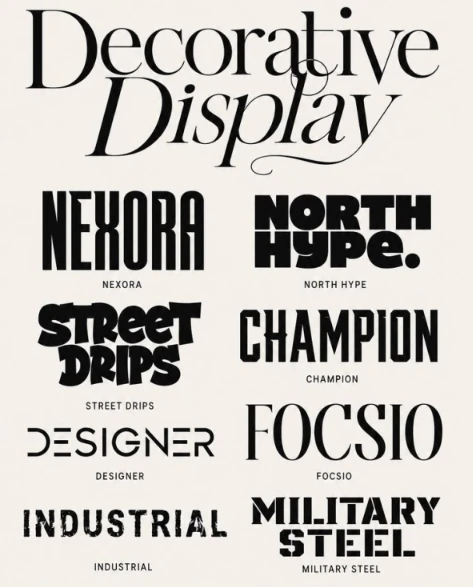
Decorative fonts are specially designed typefaces that add personality, creativity, and visual impact to a design. Unlike standard fonts that focus mainly on readability, decorative fonts often have unique shapes, artistic details, unusual patterns, or expressive styles. They are commonly used for headlines, posters, logos, invitations, packaging, advertisements, and social media graphics. Decorative fonts can create different moods, such as elegant, playful, vintage, futuristic, or dramatic. However, they should be used carefully because excessive decoration can make text difficult to read. They work best for short phrases or headings, while simpler fonts are generally better for longer paragraphs and body text.


